Table of content
Introduction
The construction sector contributes nearly 37% of global CO₂ emissions (UNEP, 2023). In India, where rapid urbanization and infrastructure growth continue, sustainable design is no longer optional—it’s a necessity for long-term cost savings, CSR impact, and climate resilience.
For NGOs and CSR donors, sustainable buildings ensure measurable social impact, while for communities, they promise healthier, affordable, and resilient spaces. At BuiltX, we design schools, hospitals, and non-profit infrastructure that embed sustainability from day one.
Checkout this top 10 CSR grants in India in 2025
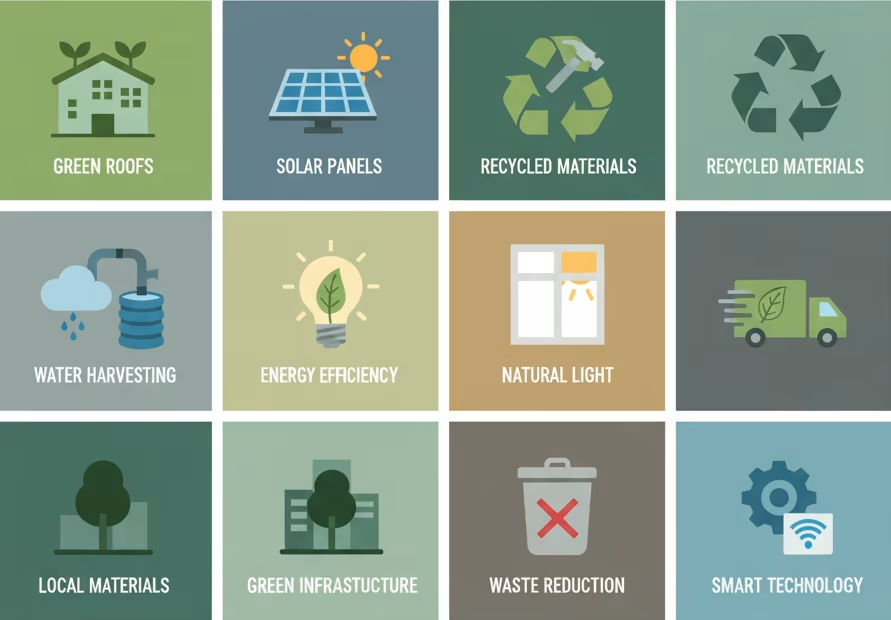
Top 10 Ways to Achieve Sustainable Design in Construction
1. Passive Design Principles
- Orientation & daylighting: Optimize building orientation to reduce cooling loads while maximizing natural daylight.
- Envelope design: Use insulation, reflective roofs, and shading devices to cut energy demand.
Impact: Passive strategies alone can reduce energy consumption by 20–30% (BEE India).
2. Energy-Efficient HVAC & Systems
- Right-size systems to avoid oversizing (which increases CAPEX & OPEX).
- Use VRF systems, DC motors, and high COP chillers.
- Smart controls: occupancy sensors, CO₂-based ventilation, and setback schedules.
Impact: Modern HVAC can reduce electricity consumption by up to 40%.
3. Renewable Energy Integration
- On-site solar PV for lighting, fans, and medical/lab loads in hospitals.
- Solar water heating for residential or institutional hostels.
- For rural schools/clinics, hybrid solar + battery solutions ensure reliable power.
4. Water Conservation Strategies
- Low-flow fixtures (30–50% water savings).
- Rainwater harvesting (RWH) integrated in site planning.
- STP + reuse: Treat wastewater and reuse for flushing/landscape.
Impact: EDGE-certified buildings in India report 25–40% water savings.
5. Sustainable Materials & Supply Chains
- Locally sourced stone, fly-ash cement, bamboo, and recycled aggregates.
- Low-VOC paints and adhesives improve indoor air quality.
- Digital procurement platforms (like BuiltX Marketplace) reduce waste in supply chains.
6. Green Building Certifications
- GRIHA (cost-effective Indian certification).
- IGBC/EDGE (good for CSR/ESG reporting).
- LEED (for urban flagship projects).
Tip: CSR donors can align certifications with ESG disclosures, making their impact measurable and globally benchmarked.
7. Smart Metering & Monitoring
- Sub-meters for HVAC, lighting, and water use.
- IoT dashboards for facility teams and donors.
- Supports impact assessment for CSR (energy saved, water conserved, CO₂ avoided).
8. Waste Management & Circular Economy
- Segregation at source in schools/hospitals.
- Reuse demolition waste in new builds.
- Composting organic waste reduces landfill load and supports gardens.
9. Health & Well-Being in Design
- Maximize natural ventilation and daylight.
- Materials with low embodied carbon and no toxic emissions.
- Biophilic design: courtyards, plants, and natural textures.
Impact: Studies show better daylight and ventilation improve student learning outcomes and patient recovery rates.
10. Lifecycle Costing & Long-Term Savings
- Focus not just on CAPEX, but OPEX.
- A sustainable building saves 20–30% annually in energy + water bills.
- For donors, lifecycle costing makes projects financially credible and scalable.
Conclusion
Sustainable design is not a checklist—it’s a mindset shift in how we plan, build, and operate infrastructure. For CSR donors, it means transparent, auditable impact. For NGOs, it means stronger funding proposals. And for communities, it means schools, hospitals, and public spaces that are healthier and cost-effective for decades.
At BuiltX, we specialize in delivering schools, hospitals, and community projects that meet NABH, NBC, GRIHA, IGBC, and EDGE standards—ensuring your project is future-ready and socially impactful.
Ready to build sustainably? Contact BuiltX today.