Construction
October 6, 2026
DPR for Construction Projects: Meaning, Cost & Components and How to Prepare One
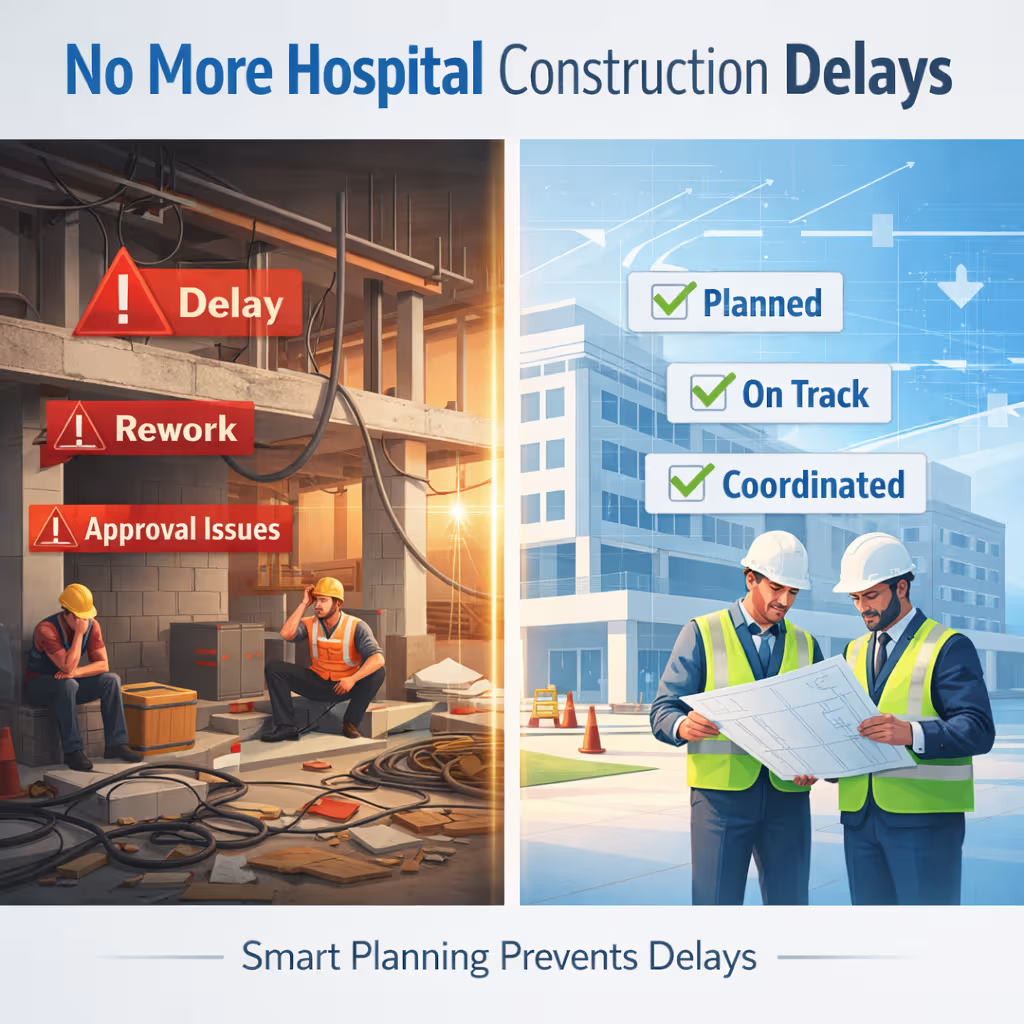
Most hospital construction delays in India don’t happen on site they are built into the project long before construction begins.
A layout gets finalized without approval clarity.
MEP systems like HVAC, medical gases, and electrical infrastructure are planned too late.
Design, compliance, and execution teams work in silos instead of alignment.
By the time construction starts, the timeline is already at risk.
This is why two hospital projects of similar size and budget can have completely different outcomes one progresses with predictable timelines, while the other gets stuck in redesigns, approval delays, and cost overruns.
If you are planning a hospital project in India, understanding what actually causes construction delays and how structured project planning prevents them is critical to keeping timelines on track.
Passive Design Strategies in 2026
A construction consultant is not just an advisor. They act as the bridge between design, approvals, and execution.
Most of these are not construction problems they are planning gaps that show up during execution.
10 Ways to Achieve Sustainable Design in Construction in 2026
Smart hospital projects don’t move faster because of execution speed they move faster because decisions, approvals, and coordination are structured early.
1. Compliance-First Design (Not Post-Facto Approvals)
Outcome: No redesign loops during approvals
2. Parallel Planning Across Teams
Outcome: 2–4 months saved in idle gaps between stages
3. Early Integration of MEP Systems
Outcome: No on-site clashes → smoother execution
4. Structured Decision Framework (Client-Side Clarity)
Outcome: Continuous execution without stoppages
5. Phasing & Expansion Strategy (Where Required)
Outcome: Faster go-live + no disruption during expansion
Green Building Materials and their Benefits
.avif)
Hospital projects don’t stay on track by working faster they stay on track because planning, approvals, and execution are aligned from day one.
Experienced teams approach this differently:
This level of structured planning typically requires a construction consultant who works across design, compliance, and execution ensuring decisions are aligned before they become problems on site.
Green Building Certification Process
1. What is the biggest cause of hospital construction delays in India?
The most common cause is lack of early planning especially around approvals, MEP coordination, and design alignment. Delays usually start before construction begins, not during execution.
2. How long does it typically take to build a hospital in India?
A 50-bed hospital usually takes 18–24 months, while larger hospitals (100–200 beds) can take 24–30 months. Timelines depend heavily on approvals, planning quality, and coordination between teams.
3. Can hospital construction projects be fast-tracked safely?
Yes, but only with structured planning. Fast-tracking without proper approval strategy and coordination often leads to rework and higher costs. Planned parallel execution is the key.
4. Why is MEP planning critical in hospital construction?
Hospitals rely heavily on systems like HVAC, medical gases, and electrical infrastructure. Poor MEP coordination can lead to on-site clashes, redesign, and significant delays.
5. How can I avoid delays in my hospital construction project?
Start with a clear approval roadmap, align design and MEP early, and avoid pushing key decisions into execution. Working with experienced planning teams can significantly reduce risks and delays.
Hospital construction delays in India are not random they are predictable.
They happen when approvals are treated as a formality, when design and MEP systems are not aligned early, and when key decisions are delayed until execution has already begun.
This is why some hospital projects get stuck in redesigns, approval bottlenecks, and cost overruns while others move forward with clear timelines and controlled execution.
The difference is not in how fast construction happens. It’s in how early the right decisions are made.
If you are planning a hospital project, the biggest advantage is not accelerating construction it is eliminating uncertainty before construction begins.
Because once execution starts, delays are expensive to fix. But during planning, they are preventable.
If you are planning a hospital project and want to avoid delays, don’t wait until construction begins to fix planning gaps.
At BuiltX, we help you define approvals, align design and engineering, and structure your project for predictable timelines.
Talk to BuiltX to plan your hospital project the right way before delays become expensive.