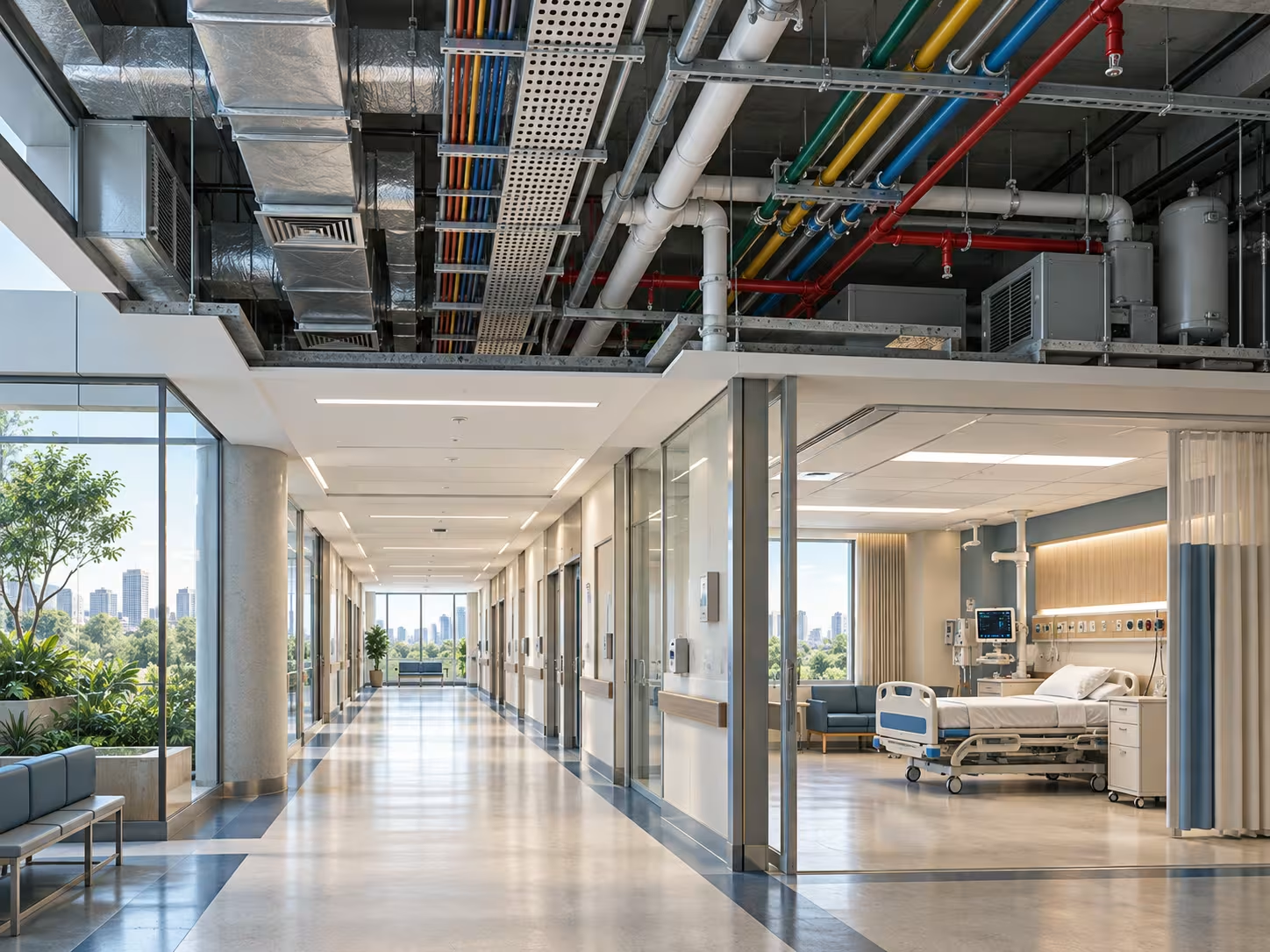
Sustainability
September 8, 2026
Top 15 Green Building Materials in India: Costs & Uses (2026)
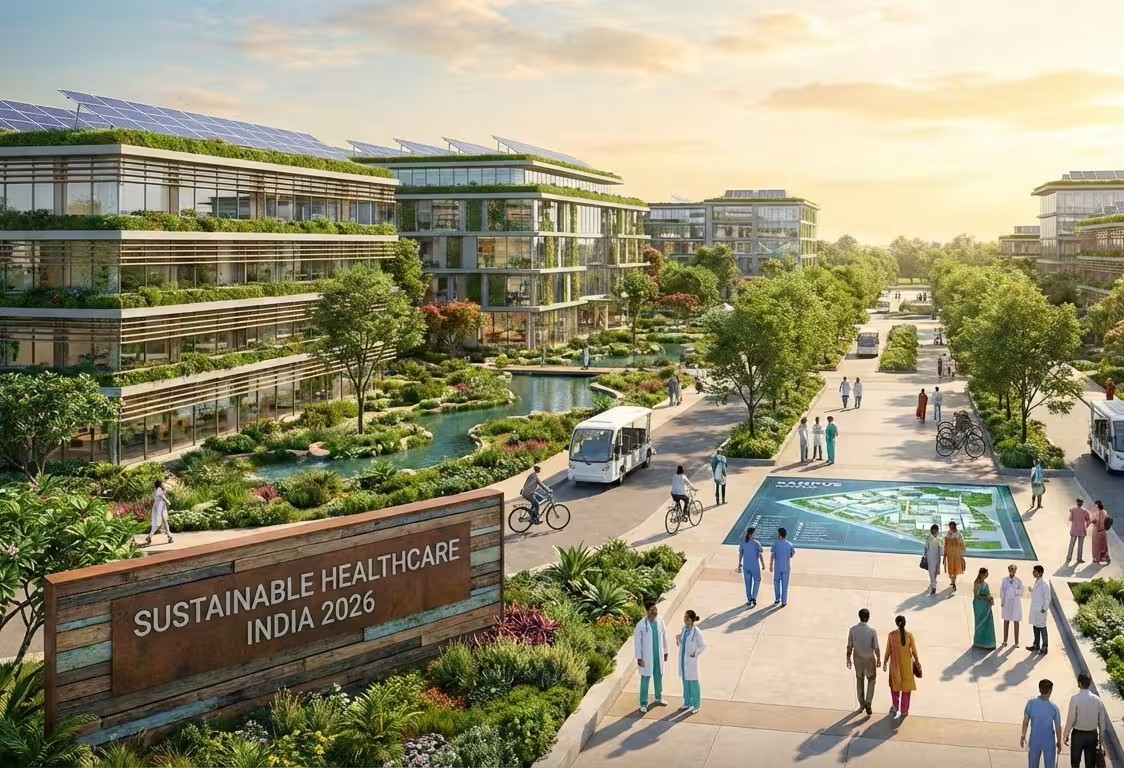
A medical campus today is not just a hospital building with hostels. It is a large, always-active healthcare and education environment that includes hospitals, medical colleges, hostels, staff housing, utilities, and waste systems all operating 24×7. Because of this scale, medical campuses consume significant energy, water, and materials, and generate high volumes of waste every day. Globally, studies show that the healthcare sector contributes around 4.4% to 5% of total greenhouse gas emissions, placing it in the same emissions range as the aviation industry.
In India, this impact is also a major cost issue. According to the Indian Green Building Council (IGBC), well-planned green healthcare buildings can reduce energy consumption by 20–30% and water use by 30–50% compared to conventional designs. These savings directly lower operating costs and often recover the additional upfront investment within a few years. This makes sustainability not just an environmental goal, but a long-term financial advantage for hospitals and medical institutions.
Designing a sustainable medical campus in India therefore means planning these efficiencies from the very beginning—at the master-planning and layout stage—rather than adding “green features” later. This guide explains, step by step, how hospital promoters, medical universities, trusts, and CSR teams can plan and build cost-efficient, climate-resilient medical campuses, and also highlights where an experienced healthcare infrastructure partner like BuiltX can support this process.
Checkout the Hospital Construction Cost in India
A sustainable medical campus is a healthcare + education ecosystem (teaching hospital, medical college, nursing college, hostels, staff housing, diagnostic and support blocks) that is:
Bodies like IGBC’s Green Healthcare rating and GRIHA explicitly evaluate healthcare projects on energy, water, site planning, materials, waste and indoor environment. (IGBC)
In India, the Ministry of Health’s “Guidelines for Green and Climate-Resilient Healthcare Facilities” (2023) recommend a structured approach across energy efficiency, water conservation and smart building systems. (National Centre for Disease Control)
See these 10 hospital design requirements to avoid mistakes
Medical campuses operate 24×7, which makes their energy, water, and operating costs much higher than most building types. This constant demand has both environmental and financial implications:
Data from Indian and international healthcare projects shows clear, measurable benefits:
For hospital promoters, medical universities, trusts, and CSR teams, sustainability is no longer just about being “green.” It is one of the most effective ways to control long-term costs, improve resilience, and future-proof medical infrastructure in India.
School Building Construction in India
Before starting design or drawings, a successful medical campus project needs clarity on what is being built and how efficiently it should operate. Defining these points early avoids redesigns, cost overruns, and compliance issues later.
Define the campus programme
Clearly outline the functional requirements of the campus:
This forms the base for master planning, phasing, and cost estimation.
Set measurable sustainability targets
Align targets with Indian frameworks such as IGBC, GRIHA, and NABH guidance, and define clear goals:
Early targets make sustainability practical and budget-friendly.
Decide certification intent early
Decide upfront whether the campus will pursue IGBC Green Healthcare / Green Campus or GRIHA certification. This choice directly affects building design, systems, landscape planning, and documentation from Day 1.
A medical campus layout is not just hospital planning—it is urban planning at campus scale. Good site planning reduces energy use, improves patient experience, and avoids operational conflicts for decades.
Plan clear zones and movement flows
Design for climate and daylight
Indian green healthcare guidelines recommend climate-responsive layouts:
Prioritise walkability and low-carbon mobility
A well-planned medical campus layout improves comfort, safety, and efficiency—while significantly lowering long-term energy and maintenance costs.
Energy use is one of the largest operating costs in hospitals and medical campuses. Designing buildings to stay comfortable with less cooling, lighting, and power is the most effective way to reduce long-term expenses and emissions.
Start with smart passive design
Best practices in green hospital design recommend reducing energy demand before adding equipment:
These measures lower cooling and lighting needs without affecting patient safety or comfort.
Use efficient systems and smart controls
Once energy demand is reduced, optimise building systems:
Industry data shows that well-designed green hospitals can achieve 20–30% or more reduction in overall energy use, while healthcare-specific green projects often report 30–40% energy savings. In several Indian states, large-scale use of solar power in healthcare facilities has reduced grid electricity bills by up to 80%, while improving reliability.
Designing low-energy, climate-responsive buildings at the campus level is one of the fastest ways to make a medical campus cost-efficient, resilient, and future-ready.
Water scarcity is a growing challenge in many Indian cities, making water-efficient medical campus design essential. National guidelines from NCDC, along with IGBC and GRIHA, emphasise early water audits, demand reduction, and reuse to control long-term operating costs.
Key water-management strategies include:
At campus scale, these measures can achieve 30–50% reduction in potable water demand. In fact, green buildings across India already save nearly 200 billion litres of water every year, demonstrating the impact of water-sensitive planning when applied early and consistently.
A sustainable medical campus must reduce construction-related environmental impact while meeting strict biomedical waste regulations throughout its operation.
Use low-impact construction materials
Ensure compliant biomedical and solid waste management
Plan waste systems at campus scale
Well-planned waste and material systems reduce environmental impact, improve compliance readiness, and lower long-term operating risks across the medical campus.
A medical campus should support healing, learning, and daily life—not just clinical functions. Research from green healthcare projects shows that good daylight, access to nature, and clean indoor air improve patient recovery, staff well-being, and overall satisfaction.
Key experience-focused design elements include:
These features are low-cost compared to medical equipment, but they significantly improve how people feel, perform, and stay connected on a medical campus—making them an essential part of sustainable healthcare design.
For a sustainable medical campus, good intent is not enough—the numbers must work. Sustainability succeeds only when it makes financial sense over the life of the campus.
Understand first cost vs life-cycle cost
Indian industry data shows that the cost gap has narrowed significantly:
To make this clear to boards and funders, a medical campus project should:
Plan development in smart phases
Phasing allows sustainability to grow with the campus:
Planning phasing from Day 1 avoids costly retrofits and ensures that each expansion improves—not weakens—the campus’s sustainability performance. Over time, this approach protects budgets, improves approvals, and strengthens the long-term business case for a sustainable medical campus.
How to construct an affordable hospital in 2026
Designing a sustainable medical campus in India is no longer optional—it is the most practical way to control long-term costs, improve patient and staff experience, and stay compliant as healthcare infrastructure grows. When sustainability is planned from the master-planning stage, medical campuses can reduce energy and water use, recover costs faster, and expand smoothly over time.
This is where experience matters. BuiltX Sustainable Design & Construction works with hospital promoters, medical universities, trusts, and CSR teams to plan and deliver cost-efficient, future-ready medical campuses aligned with Indian healthcare standards and funding realities.
If you are planning a new medical campus or an expansion, engage early with BuiltX to evaluate your site, costs, and sustainability strategy—before design decisions become expensive to change.
Best Hospital Construction Company for non profits