Construction
October 6, 2026
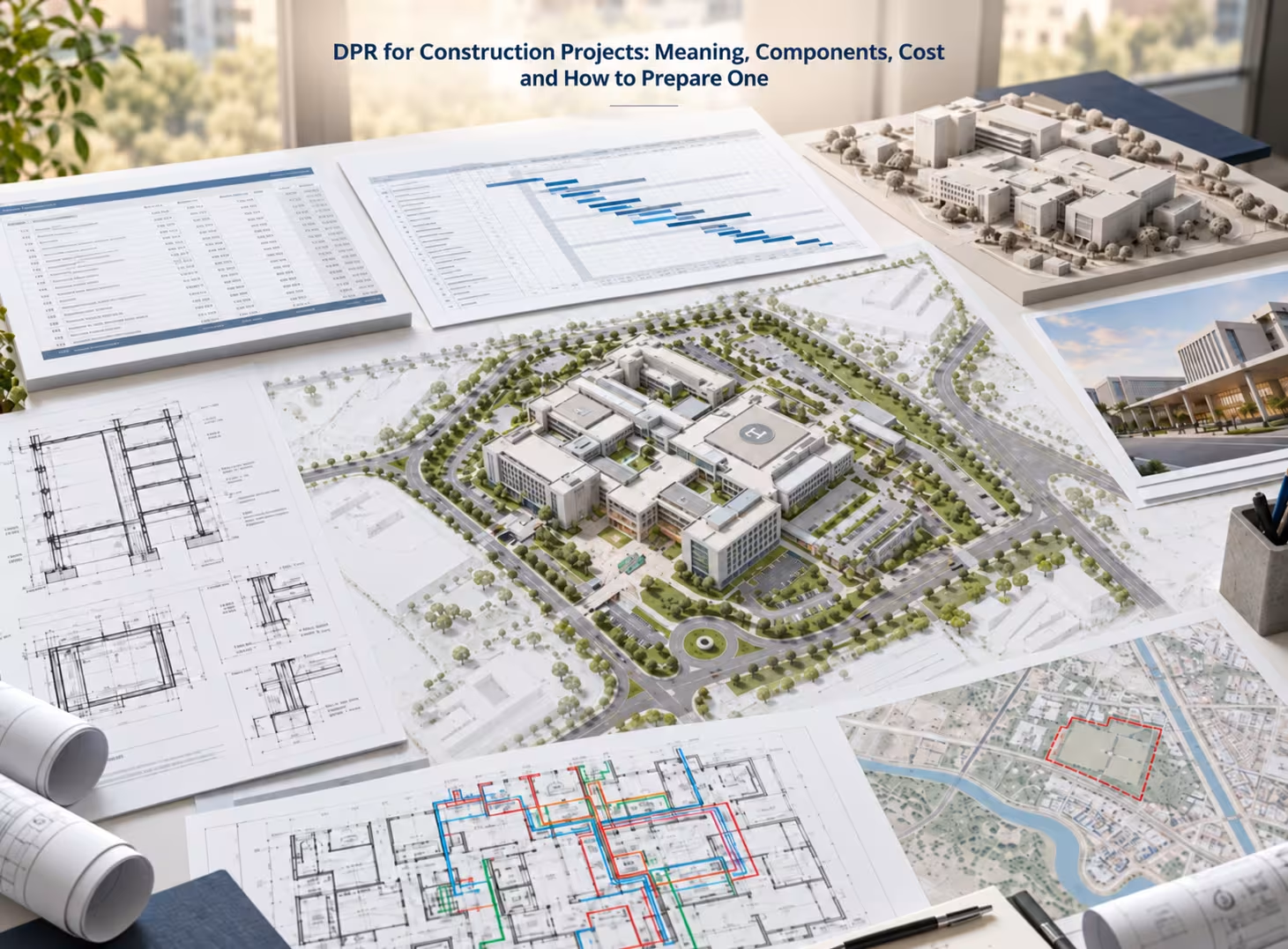
DPR for Construction Projects: Meaning, Cost & Components and How to Prepare One
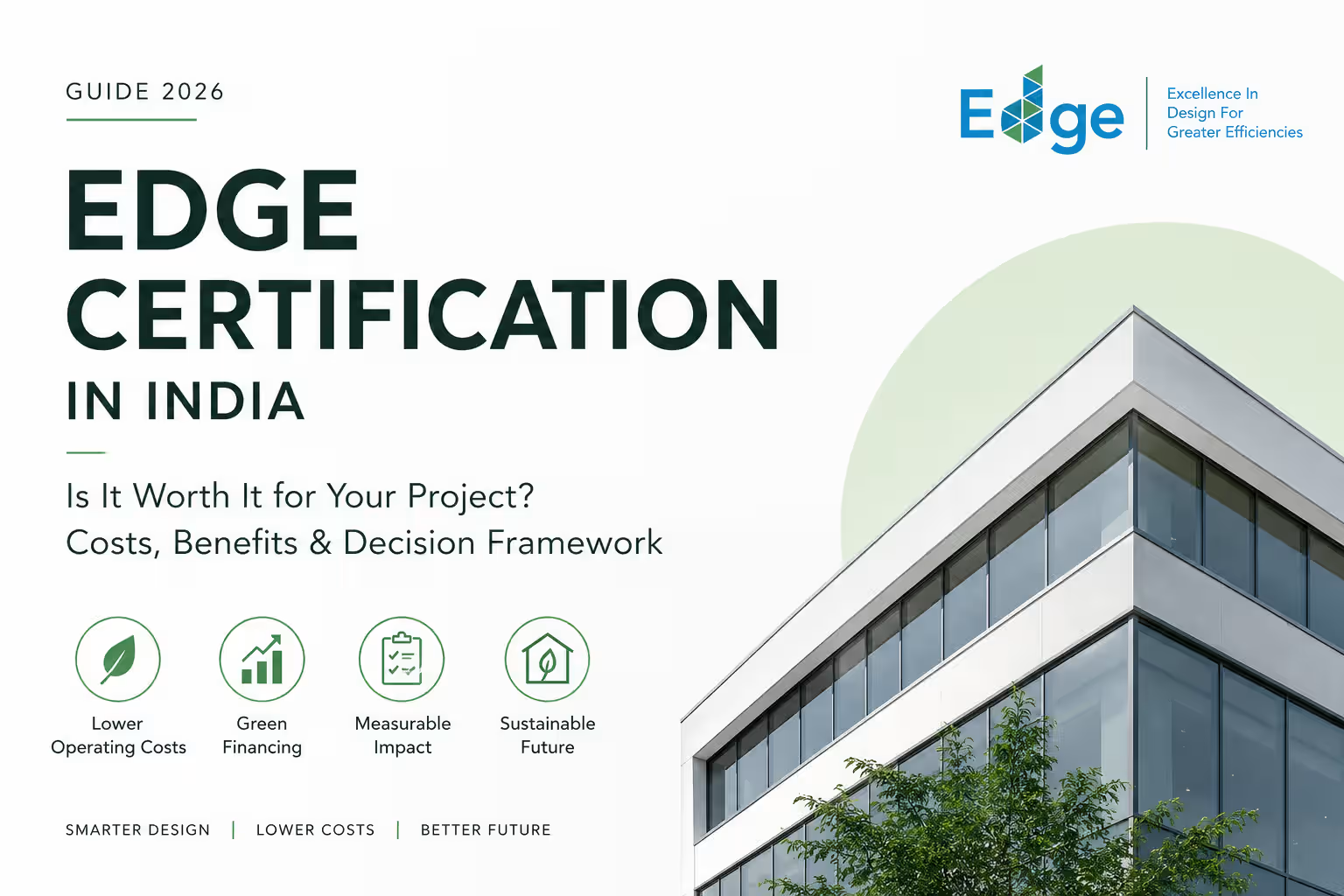
Most organizations begin exploring EDGE certification after their project design is already underway.
Unfortunately, that is often the most expensive time to make the decision.
Whether you're developing a hospital, educational campus, NGO facility, cultural institution, or administrative building, EDGE certification can reduce long-term operating costs, improve sustainability performance, and strengthen access to green financing. But achieving these benefits depends heavily on when the decision is made.
This guide explains what EDGE certification is, how it works, how much it costs, and whether it is the right fit for your project.
EDGE (Excellence in Design for Greater Efficiencies) is a green building certification system developed by the International Finance Corporation (IFC), a member of the World Bank Group.
Unlike many sustainability frameworks that focus on extensive documentation and complex scoring systems, EDGE was created specifically for emerging markets where cost efficiency and practical implementation matter.
To achieve certification, a project must demonstrate at least:
compared to a local baseline building.
The certification can be applied to:
EDGE focuses on measurable performance improvements rather than prescribing specific technologies or materials.
India's construction industry is facing growing pressure to deliver buildings that are not only functional but also resource efficient.
Energy costs continue to rise.
Water availability is becoming increasingly uncertain in many regions.
Investors, donors, and regulators are demanding stronger sustainability reporting.
As a result, building owners are looking for practical ways to improve performance without significantly increasing project costs.
EDGE has gained traction because it balances sustainability objectives with financial feasibility.
For many projects, the certification creates value in three ways:
For institutions planning long-term assets, these benefits often outweigh the certification costs.
This should be the centerpiece of the article.
Score:
The certification process begins during project planning and design.
Step 1: EDGE Modeling
The project team uses the EDGE software platform to compare the proposed building against a standard local baseline. This stage evaluates:
The goal is to identify strategies that achieve the required savings targets.
Step 2: Preliminary Certification
Once the modeled design meets the EDGE thresholds, the project can obtain preliminary certification.
Step 3: Construction Verification
During construction, the project team documents that the installed systems and materials match the approved design.
Step 4: Independent Audit
An accredited EDGE Auditor reviews project documentation and conducts verification.
Step 5: Final Certification
After successful verification, the project receives EDGE certification.
One of the most common questions is:
"How much does EDGE certification cost?"
The answer depends on three components.
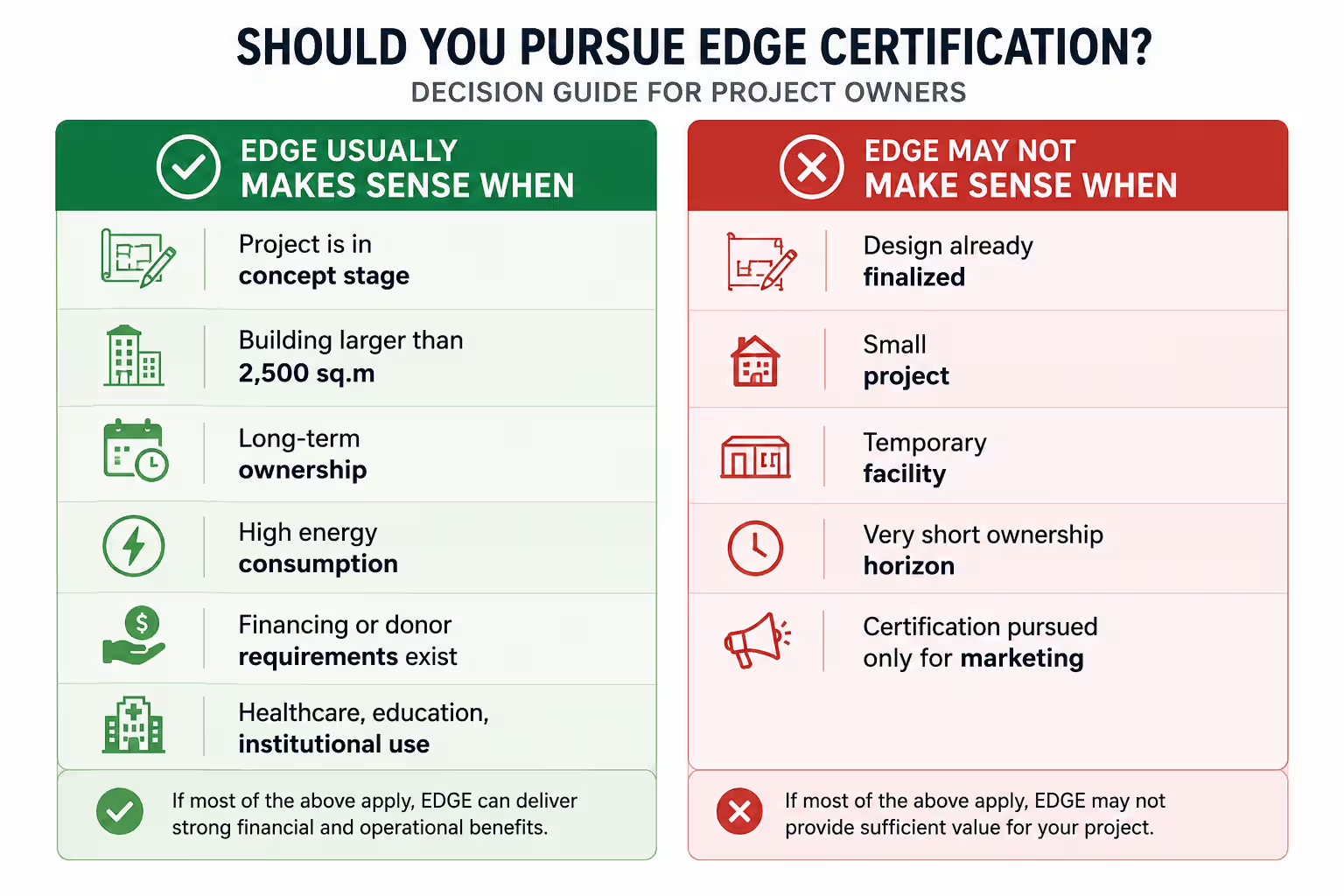
Projects that pursue EDGE after design decisions have been finalized typically face significantly higher costs.
Typical Cost Impact
This is why timing is often more important than certification cost itself.
Project owners frequently compare EDGE with other green building certifications.
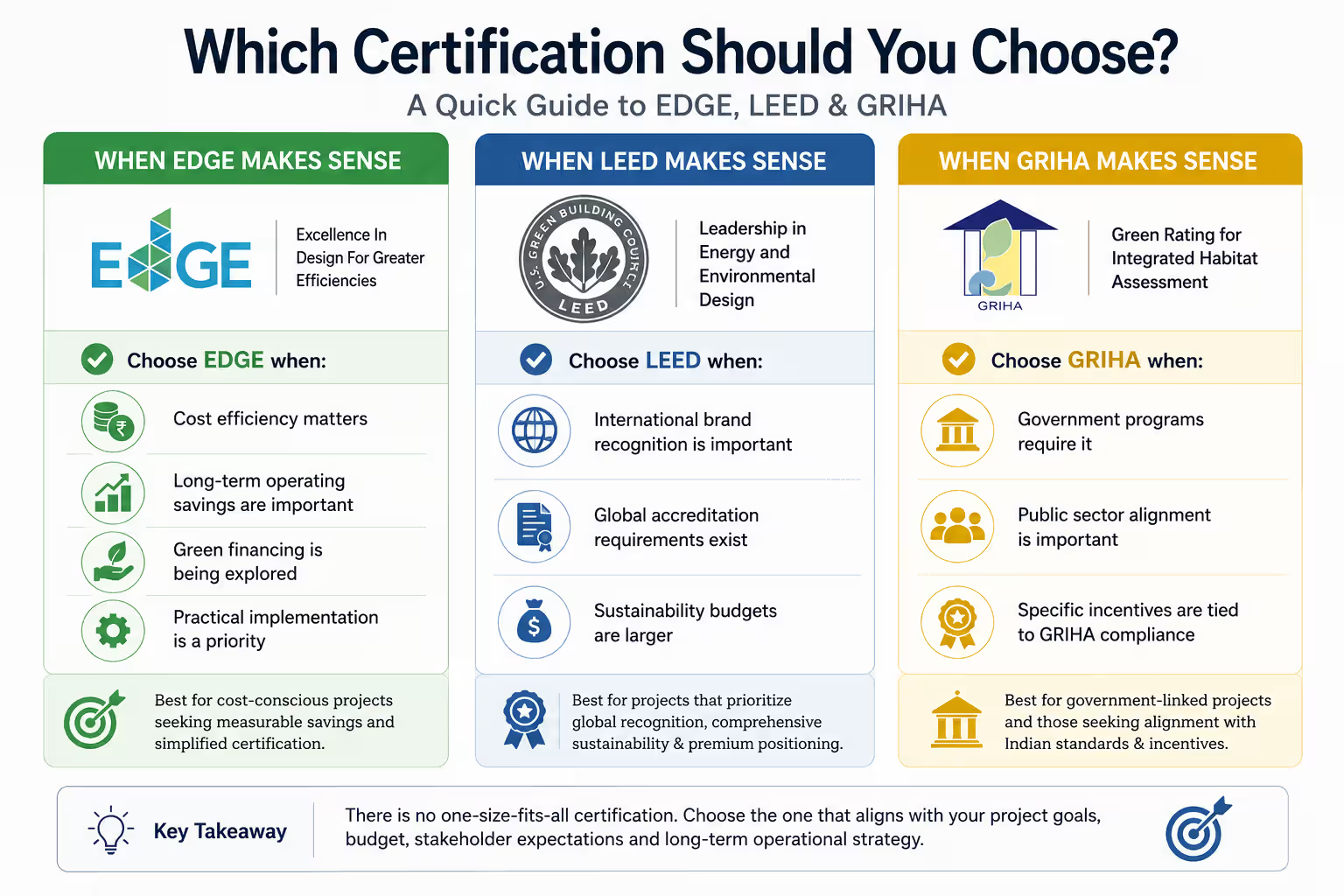
While EDGE can be applied across multiple sectors, certain building types often achieve the strongest return on investment.
Many projects pursue EDGE successfully.
However, several recurring mistakes reduce the financial benefits.
1: What is EDGE Certification?
EDGE (Excellence in Design for Greater Efficiencies) is a green building certification developed by IFC. To qualify, a project must achieve at least 20% savings in energy, water, and embodied energy in materials compared to a standard local building.
2: How much does EDGE Certification cost in India?
The cost depends on project size, consultant fees, and sustainability measures. For most institutional projects, certification and consultancy costs typically range from a few lakhs to several lakhs, with overall costs being lower when EDGE is considered during the planning stage.
3: Is EDGE Certification better than LEED or GRIHA?
It depends on project goals. EDGE is often preferred for cost-effective sustainability and green financing opportunities, while LEED focuses on global recognition and GRIHA is commonly used for government-linked and public sector projects.
4: When should a project pursue EDGE Certification?
The best time is during concept planning or early design. This allows project teams to optimize building performance before key design decisions are finalized, making certification more cost-effective and easier to achieve.
5: Is EDGE Certification worth it for hospitals and educational campuses?
In many cases, yes. Hospitals, educational institutions, NGOs, and cultural facilities typically have long operating lifecycles, making it easier to recover certification-related investments through lower utility and operating costs.
6: Can existing buildings get EDGE Certification?
Yes. EDGE can be applied to both new construction and existing buildings undergoing renovations or performance upgrades, provided the required efficiency improvements can be demonstrated.
EDGE certification is not just a sustainability credential—it is a strategic infrastructure decision.
For hospitals, educational campuses, NGOs, and cultural institutions, the greatest benefits come when EDGE is considered during project planning rather than after design decisions have already been made. Early integration can reduce operating costs, support green financing opportunities, strengthen ESG reporting, and improve long-term building performance.
Ultimately, the question is not whether your project can achieve EDGE certification. The question is whether pursuing it will create meaningful value for your organization over the life of the asset.
BuiltX helps healthcare, education, cultural, and mission-driven organizations evaluate, plan, and deliver high-performance buildings. From feasibility studies and design management to project execution and sustainability strategy, we help project teams make informed decisions before costly design constraints emerge.
If you're evaluating EDGE certification for an upcoming project, connect with the BuiltX team to understand whether it aligns with your goals, budget, and long-term operational strategy.