Construction
October 6, 2026
DPR for Construction Projects: Meaning, Cost & Components and How to Prepare One
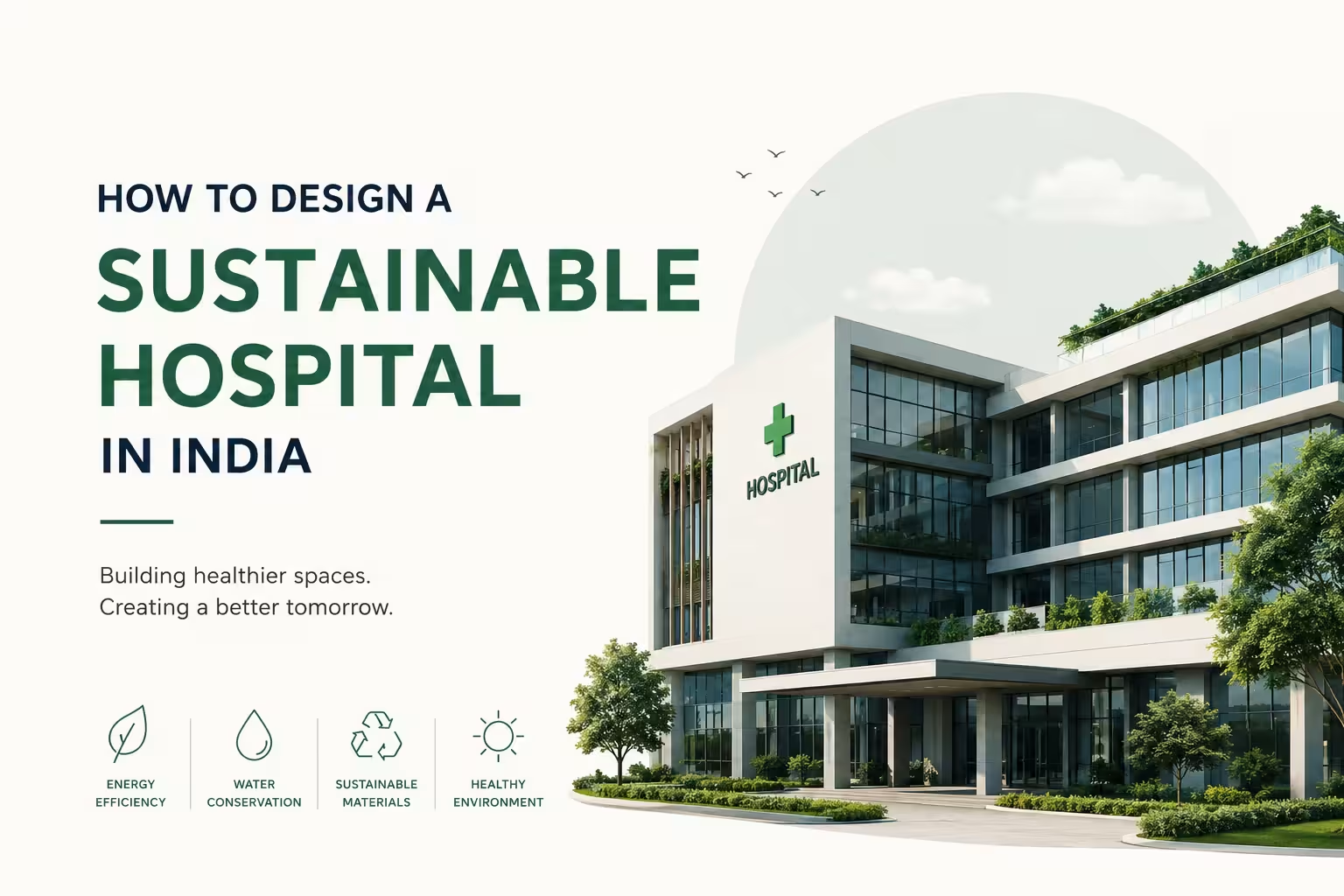
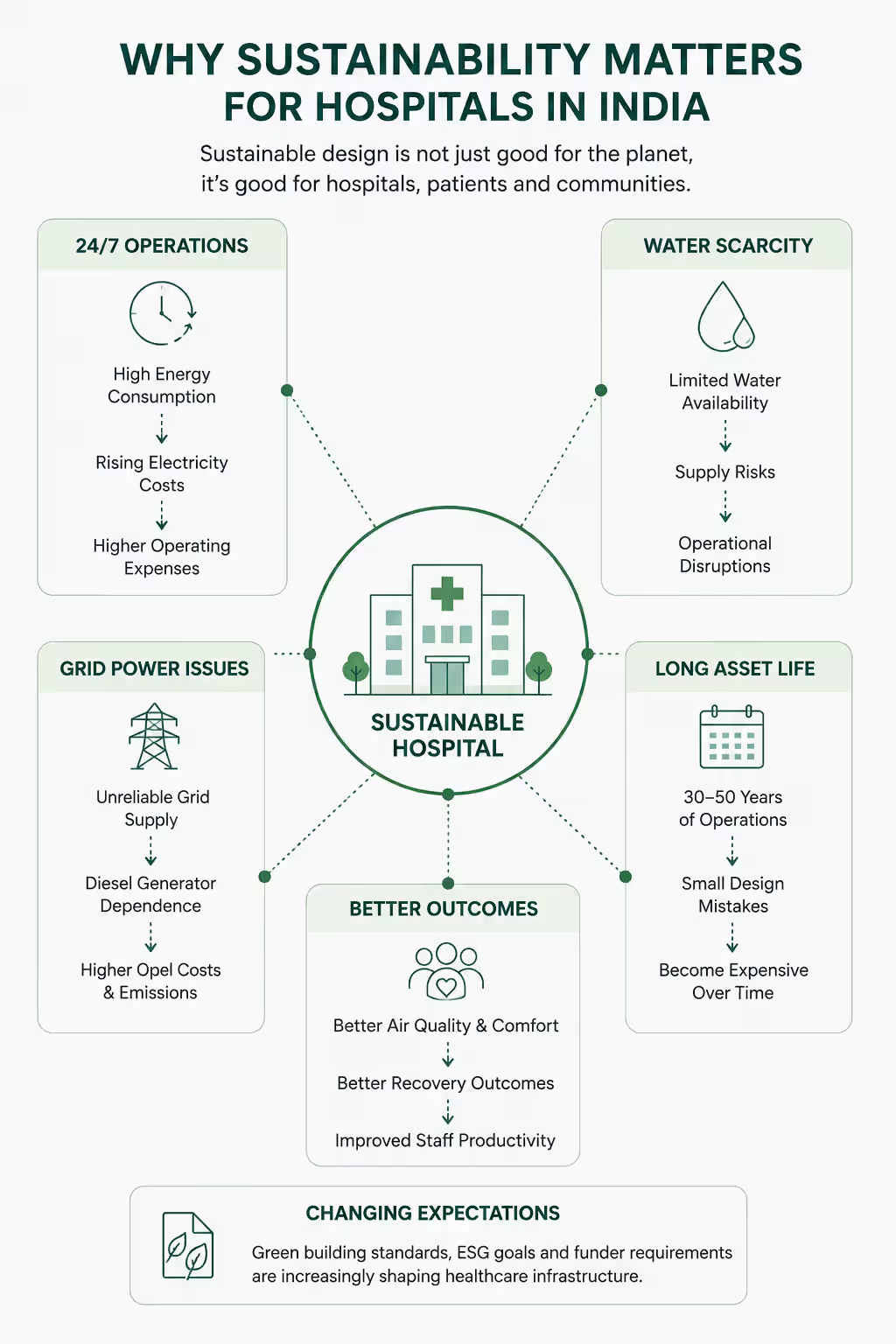
Hospitals never stop running. Unlike offices or schools, they operate every hour of every day — with continuous HVAC, 24/7 medical equipment, round-the-clock lighting, and strict ventilation requirements that cannot be relaxed. In India, this operational reality is compounded by rising electricity tariffs, unreliable grid supply, growing water stress in many cities and towns, and assets that will be in use for 30 to 50 years.
For hospital boards, healthcare trusts, and NGOs planning new facilities, these pressures make the case for sustainable design financially straightforward — not aspirational. The question is rarely whether to design sustainably. It is how to integrate the right decisions at the right stage so that they reduce cost rather than add to it.
This article covers the key strategies, cost considerations, and long-term benefits of sustainable hospital design in India — written for institutions making these decisions, not for those learning about them for the first time.
Sustainable hospital design is not a checklist of green features added near the end of a project. It is a set of decisions — about site, building form, systems, materials, and operations — made early and carried consistently through design and construction.
When those decisions are made late, they become expensive retrofits. When made early, several of them actually reduce capital cost by shrinking the size of equipment needed.
The core dimensions of sustainable hospital design are:
The case for sustainable design in Indian hospitals is not environmental first — it is operational.
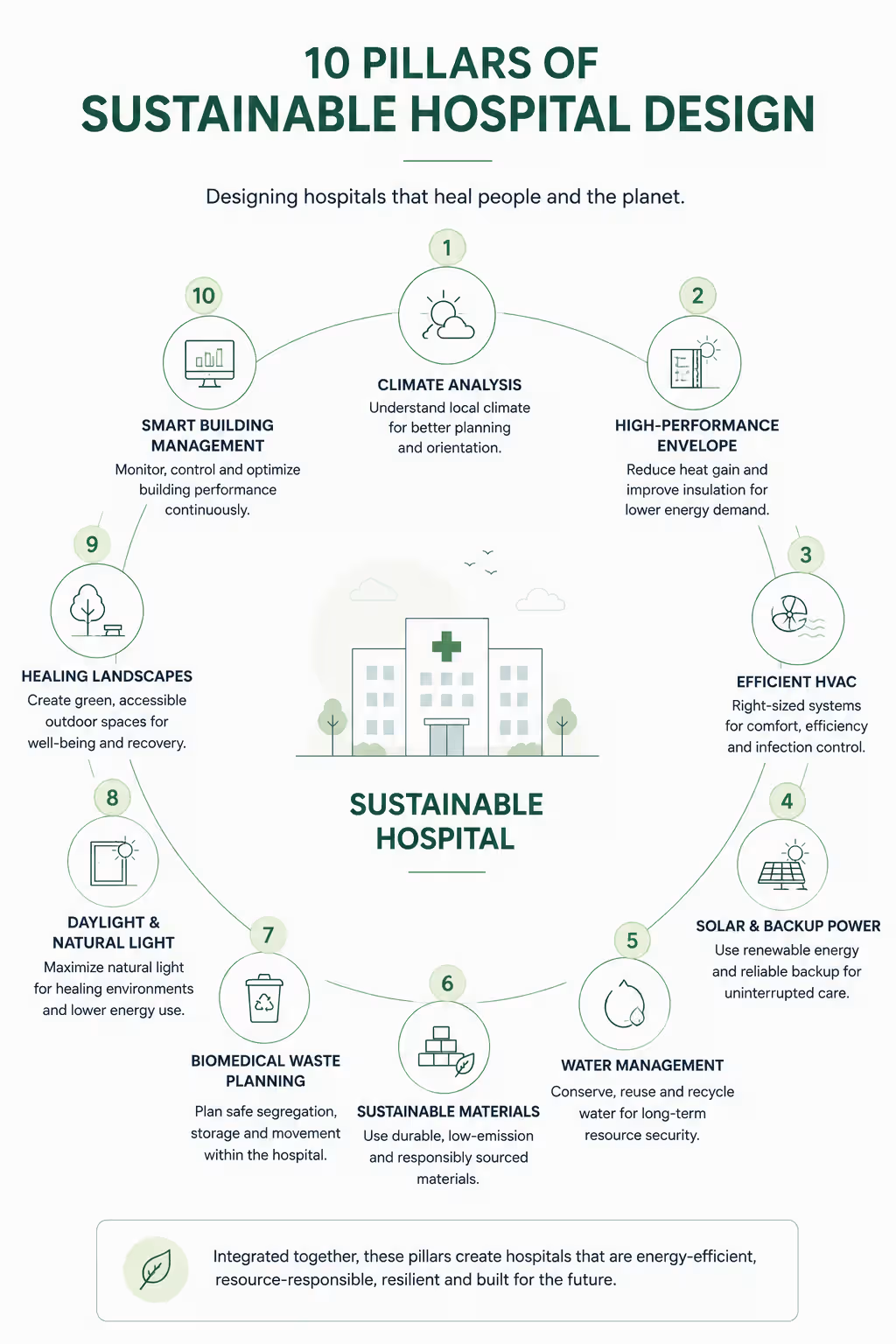
1. Start With Climate Analysis, Not Just Site Selection
India spans multiple climate zones — hot-dry, warm-humid, composite, temperate, and cold. A hospital in Rajasthan is a fundamentally different design problem from one in Kerala or Himachal Pradesh. Sustainable design begins with a thorough understanding of prevailing winds, solar angles, rainfall patterns, and temperature ranges at the specific project location.
This analysis should inform site planning decisions: how the building is oriented, where service and waste zones are placed, how existing trees and topography can be used, and what the baseline cooling and ventilation demand is likely to be.
2. Get the Building Envelope Right Before Sizing Equipment
The building envelope — walls, roof, glazing, and shading — determines the baseline thermal load that HVAC systems must manage. In most Indian climates, the design priority is reducing solar heat gain while managing natural ventilation where infection-control requirements allow it.
Key decisions include:
A well-designed envelope can meaningfully reduce the cooling load — which in turn allows HVAC plant to be sized smaller. That is a capital saving, not just an operating one.
3. Right-Size HVAC From the Start
HVAC is typically the single largest energy consumer in a hospital. It must also meet strict infection-control requirements — particularly in operating theatres, ICUs, isolation rooms, and pharmacy clean rooms. These requirements cannot be compromised, but they can be met efficiently.
Oversizing HVAC is one of the most common and costly mistakes in hospital design. Equipment sized too large costs more upfront, runs less efficiently at partial load, and wears out faster.
Sustainable HVAC planning includes:
Separate mechanical systems for critical zones should be designed in from the start. Retrofitting them later is significantly more expensive and disruptive.
4. Plan Solar and Backup Power as Infrastructure, Not Add-Ons
India has strong solar irradiation across most of its geography, and hospitals have large, flat roof areas that are otherwise unused. A rooftop solar PV system can meaningfully offset daytime electricity consumption, reduce grid tariff exposure, and — when combined with battery storage — provide partial backup during outages.
Planning for solar means making structural provisions in the roof from the beginning, keeping shadow-free zones clear of water tanks and AC units, and understanding net metering arrangements under the relevant state DISCOM policy.
Diesel generators remain necessary for full backup capacity in most Indian hospitals. However, a well-designed solar and battery system can significantly reduce generator run-time and fuel costs — which matters both operationally and from a lifecycle cost standpoint.
5. Build a Water Strategy That Does Not Depend Entirely on External Supply
Hospitals are major water consumers: sterilisation, patient care, laundry, and kitchen operations together require large volumes of clean water, continuously. An integrated water management strategy combines three elements:
In water-scarce regions, on-site water recycling is not an optional feature. For NGO-operated hospitals in rural or semi-urban areas, where municipal supply may be unreliable or absent entirely, it is a functional necessity.
6. Specify Materials That Support Indoor Air Quality and Durability
Healthcare environments are unusually sensitive to indoor air quality. Patients with compromised immunity, respiratory conditions, or post-operative vulnerability are affected by VOC off-gassing from paints, adhesives, flooring, and furniture.
Material selection for hospitals should prioritise:
Durability matters here for practical reasons too. Specifying correctly from the start avoids the cost and disruption of early replacement of finishes in high-traffic clinical areas.
7. Integrate Biomedical Waste Flow Into the Building Layout
Hospitals generate multiple waste streams that must be handled separately under Indian regulations, including the Biomedical Waste Management Rules, 2016: general municipal waste, biomedical waste, pharmaceutical waste, electronic waste, and wastewater.
Sustainable hospital design integrates this into the building layout from the planning stage:
Waste flow is consistently underplanned in hospital projects. Correcting it after construction is expensive and operationally disruptive.
8. Use Controlled Daylighting — Not Just Glazing
Natural light improves patient recovery outcomes and reduces artificial lighting loads. In India's predominantly hot climates, however, uncontrolled glazing creates as many problems as it solves — increasing heat gain, glare, and cooling demand.
The approach that works is controlled daylighting:
9. Design Outdoor Spaces That Are Actually Usable
Evidence from healthcare design research consistently links access to natural environments with faster patient recovery and lower stress for clinical staff. In Indian climates, designing outdoor spaces that people actually use requires more than planting trees and laying paving.
Usable healing landscapes include shaded courtyards and verandas, native and drought-tolerant planting that does not require continuous irrigation, and permeable paving that reduces surface heat and runoff. High-water-demand lawns and exotic plantings in hot-dry or composite climates undermine both the water strategy and the maintenance budget.
10. Commission a Building Management System That Operations Teams Will Actually Use
A Building Management System (BMS) integrates HVAC controls, lighting, power monitoring, water meters, and backup systems into a single interface. For hospital facilities managers, it provides real-time visibility into where energy and water are being consumed, when equipment is running abnormally, and where waste is occurring.
A BMS does not save resources by itself — but it gives operations teams the data they need to act. For larger hospitals, energy dashboards also support green certification compliance, ESG reporting, and benchmarking over time.
The critical planning point: a BMS is only as useful as the team operating it. Procurement should include commissioning support and staff training, not just hardware installation.
Two rating systems are most relevant for Indian hospital projects.
Both systems offer structured frameworks that can guide design decisions from the concept stage. Certification also carries practical value for institutions seeking green finance, government recognition, donor alignment, or CSR sponsor credibility.
The right choice depends on the project's funders, scale, and objectives. Both are worth evaluating early — ideally before the design brief is finalised.
There is no single cost premium for sustainable hospital design. The actual impact depends on project type, bed count, location, MEP intensity, materials specification, and what baseline the project is being compared against.
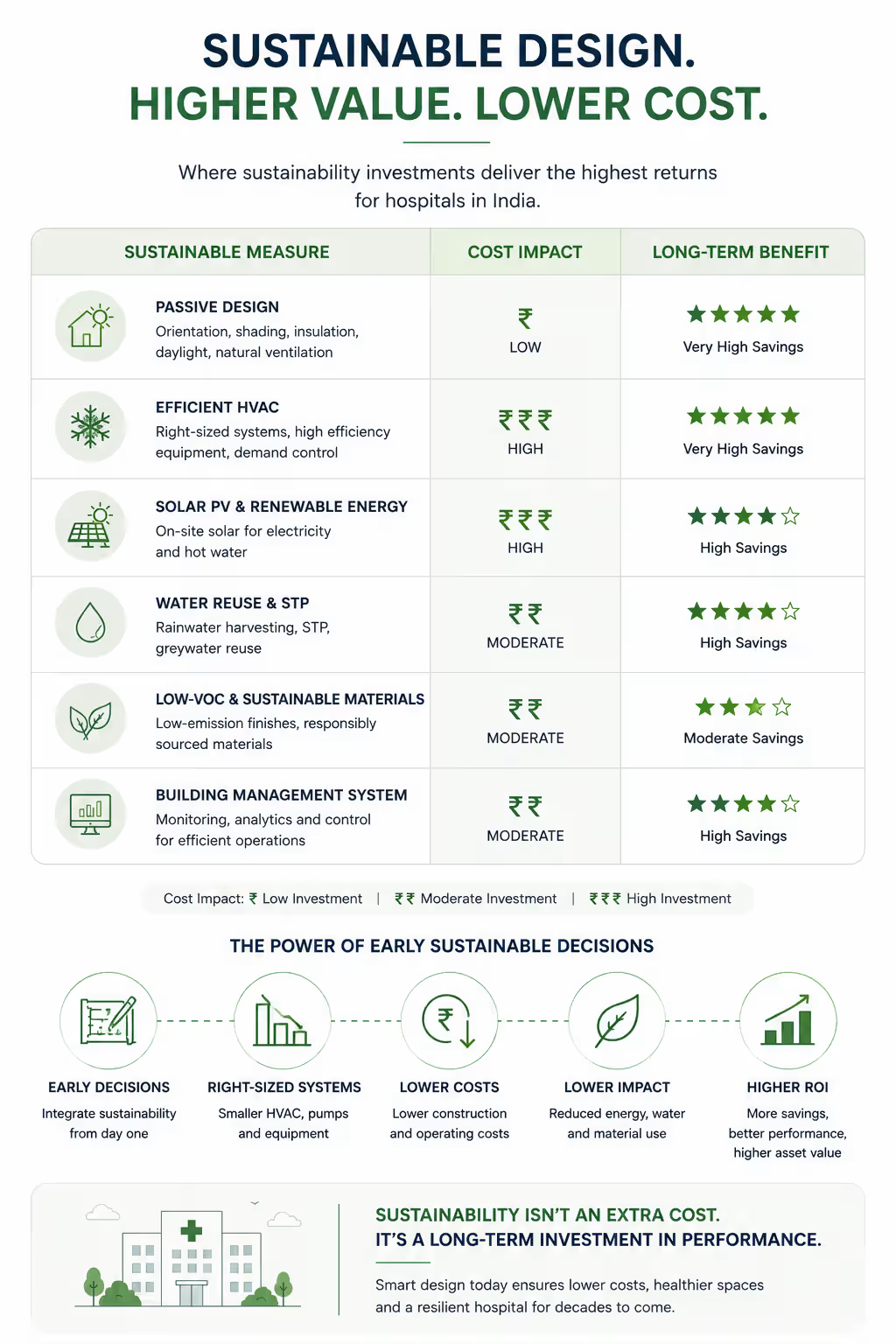
The table below gives a realistic sense of where sustainable measures land in terms of cost and return:
The most important cost principle: passive design decisions add little to construction cost and reduce the size of HVAC equipment required — which is a direct capital saving. The higher-cost measures, such as solar and HVAC upgrades, carry clear payback periods that, at hospital scale, fall well within the asset's operational life.
Institutions planning sustainable hospitals should ask their design and cost consultants to model lifecycle costs — not just construction cost — before finalising which measures to include.
Viewed across a 20- to 30-year horizon, the case for sustainable hospital design is straightforward:
1. What is a sustainable hospital design?
A sustainable hospital design reduces energy, water, and material consumption while creating a healthier environment for patients, staff, and visitors. It focuses on long-term operational efficiency, resilience, and environmental performance.
2. Why is sustainable hospital design important in India?
Hospitals operate 24/7 and consume significantly more energy and water than most commercial buildings. Sustainable design helps reduce operating costs, improve patient outcomes, support ESG goals, and comply with evolving green building standards.
3. How much does it cost to build a sustainable hospital in India?
A sustainable hospital may require an additional upfront investment of 2–8% depending on the project scope. However, lower utility bills, reduced maintenance costs, and longer asset life often result in substantial savings over the building's lifecycle.
4. Which green building certification is best for hospitals in India?
Popular options include IGBC, GRIHA, and EDGE. The best choice depends on project size, sustainability goals, funding requirements, and operational priorities.
5. How can hospitals reduce energy consumption through design?
Hospitals can reduce energy consumption through passive design strategies, high-performance building envelopes, daylight optimization, efficient HVAC systems, LED lighting, building management systems, and renewable energy integration.
6. What are the most effective water-saving strategies for hospitals?
Rainwater harvesting, low-flow fixtures, sewage treatment plants (STPs), greywater reuse, leak detection systems, and water-efficient landscaping are among the most effective strategies for reducing water consumption.
Sustainable hospital design is not about adding green features—it is about creating healthcare facilities that cost less to operate, perform better for patients, and remain resilient for decades. By integrating energy efficiency, water conservation, patient-centric design, and long-term planning from day one, hospitals can achieve both environmental and financial sustainability.
Planning a Sustainable Hospital Project?
BuiltX helps healthcare organizations, NGOs, and trusts design and deliver hospitals that are efficient, future-ready, and cost-effective. If you're planning a new hospital or healthcare campus, our team can help you optimize sustainability, performance, and lifecycle costs from the very beginning.
Talk to BuiltX to explore your hospital project.