Construction
October 13, 2026
Construction Cost Overrun: Causes, Warning Signs & Control
CSR-funded construction projects in India are not evaluated like regular building projects.
They are governed by Section 135 of the Companies Act, 2013 and carry higher accountability, public scrutiny, and long-term responsibility. Most project failures, funding delays, or audit issues do not happen during construction they happen before work starts, when evaluation does not clearly establish land status, approval pathways, or post-handover usability.
With tighter scrutiny in 2026, CSR committees, foundations, and NGOs are asking a practical question:
How do we ensure the infrastructure we fund is compliant, auditable, and actually usable in the long term?
This guide explains how CSR-funded construction projects are evaluated, approved, and monitored in India, using real execution insights not policy theory.
Who this guide is for: CSR heads, foundations, NGOs, trusts, and institutions funding hospitals, schools, hostels, sports and community infrastructure projects.
Best Certifications for CSR Funded Infrastructure
In CSR-funded construction projects, evaluation happens before any funding is committed. This stage decides whether a project is safe to fund, compliant with CSR law, and viable to execute on ground.
Unlike regular construction projects, CSR evaluation is multi-layered. It is not just about cost or intent it focuses on risk prevention, audit safety, and long-term usability of the asset.
Key Evaluation Areas CSR Committees Focus On
What Commonly Gets Missed During Evaluation
//infographic
Who Actually Evaluates CSR Construction Projects?
CSR project evaluation is not a single-person or single-department decision.
A typical evaluation stack includes:
Each layer looks for different risks legal, financial, technical, or reputational. When feasibility is weak, these risks emerge late, slowing approvals or stopping projects mid-way.
A strong evaluation stage ensures the project moves smoothly into the approval and monitoring phases, without surprises.
Once a CSR construction project clears evaluation, it moves into the formal approval stage. This is where intent is converted into authorised funding, defined responsibilities, and audit-ready commitments.
CSR approvals are deliberate and structured by design. The process exists to protect corporate donors, board members, and implementing partners from legal, financial, and reputational risk.
Typical CSR Approval Flow (Simplified)
Each step narrows ambiguity. By the time a project reaches board approval, scope, cost, timelines, and responsibilities are expected to be clear and defensible.
What CSR Committees Look for During Approval
Approval is not just about whether a project is “good” or “impactful.” CSR boards focus on whether the project is approvable, auditable, and executable without surprises.
Projects with:
often face delays or repeated clarifications.
CSR committees strongly prefer milestone-linked funding, where disbursements are tied to measurable progress, statutory readiness, and site realities. This reduces audit risk and ensures funds are released only when execution is on track.
Planning a Hostel Building in India with right Construction Partner
Documents Required for CSR Construction Approval
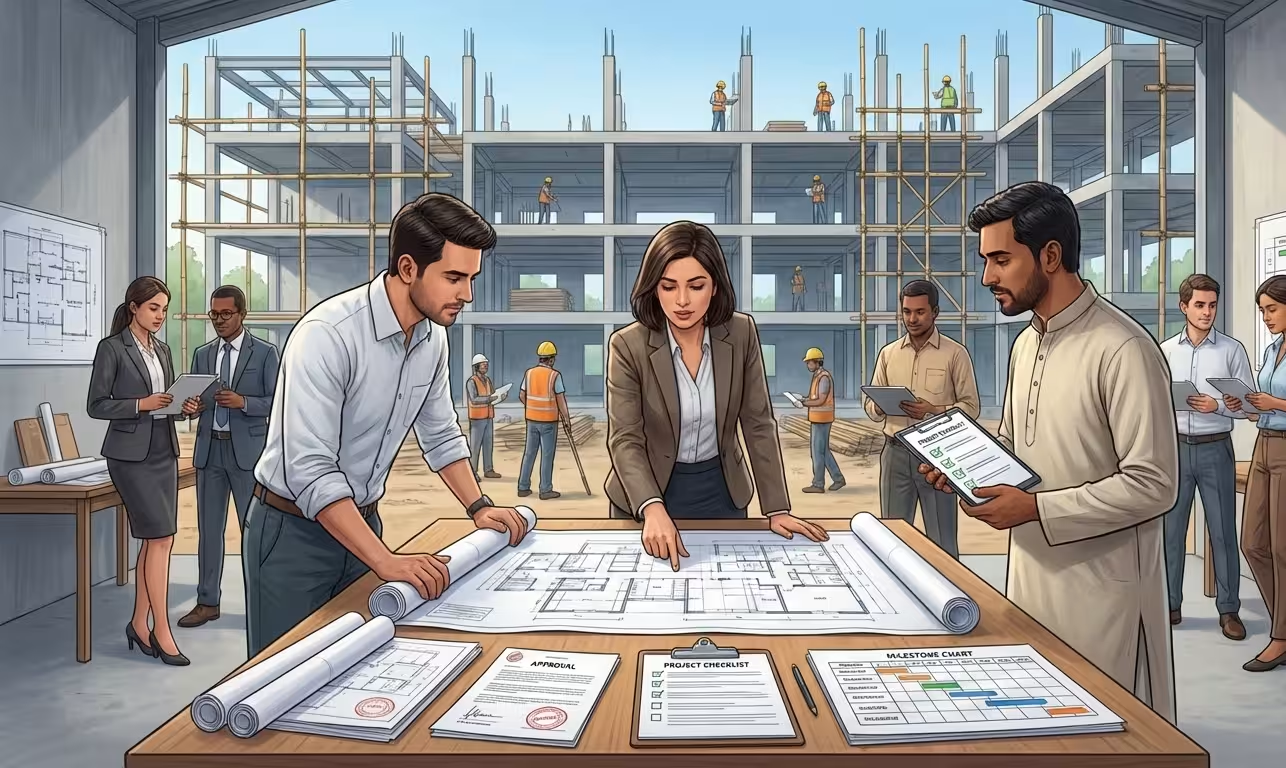
CSR construction approvals are document-heavy by intention. Documentation is the primary way boards and auditors manage long-term risk.
Why Many CSR Projects Slow Down at the Approval Stage
//infographics
For CSR-funded construction projects, approval is only the starting point.
Unlike conventional projects, CSR construction is continuously monitored throughout execution. This is because corporate donors remain accountable for how funds are used—not just at handover, but during every stage of implementation.
Monitoring ensures that:
Common Monitoring Mechanisms Used in CSR Construction
Most CSR-funded projects are tracked using a combination of financial, technical, and compliance controls:
These mechanisms are designed to prevent scope drift, cost misuse, and post-completion audit objections.
Hospital Construction in Bihar
What CSR Teams Actively Monitor During Construction
Monitoring is not limited to construction speed. CSR teams track multiple dimensions simultaneously:
Progress is considered acceptable only when physical execution, financial usage, and approvals move together.
CSR-funded infrastructure must remain:
Strict monitoring ensures that assets are completed exactly as approved, without compromising safety, capacity, or long-term operation.
This is why, in CSR construction projects, design discipline matters as much as construction speed. Projects that respect approved scope and reporting requirements move faster overall because funding remains uninterrupted.
Most CSR construction projects do not fail due to lack of intent or funding.
They fail because planning, approvals, and execution readiness are not aligned early enough.
In practice, many CSR-funded hospitals, schools, hostels, and community facilities stall after approvals or mid-construction, when correcting mistakes becomes expensive and slow.
Common Failure Points in CSR Construction Projects
How to Avoid These Problems
Most of these failures can be avoided with early planning and approval-aware execution.
BuiltX Sustainable Design & Construction helps CSR donors and NGOs plan projects correctly from the start—covering feasibility, approvals, realistic costs, and monitoring—so projects don’t stall and actually reach completion.
Download the CSR Construction Project Proposal Checklist
CSR-funded construction works best when planning comes before funding.
Strong evaluation reduces approval risks, structured approvals prevent delays, and disciplined monitoring protects trust and compliance. Projects planned with execution in mind are more likely to remain usable, compliant, and impactful—not just completed.
Before committing CSR funds, a brief feasibility or execution-readiness check can identify approval gaps, cost risks, and operational issues early.
BuiltX Sustainable Design & Construction helps CSR donors and NGOs plan approval-ready, audit-safe infrastructure by aligning design, approvals, costing, and execution from the start—so CSR projects don’t stall and deliver real, lasting impact.
Want your CSR infrastructure to actually work on ground?
Connect with BuiltX to plan approval-ready, audit-safe projects that reach completion and remain usable long after handover.
Q1. Why are CSR-funded construction projects evaluated more strictly?
Because CSR projects involve public accountability, board oversight, and statutory audits. Any compliance or usage gap can trigger audit objections or funding pauses.
Q2. When do most CSR construction projects fail?
Most failures happen before or soon after approval, due to weak DPRs, unclear land status, missing approvals, or unrealistic cost estimates.
Q3. Are statutory approvals mandatory for CSR-funded buildings?
Yes. Fire NOC and local authority approvals are mandatory. CSR approval does not replace statutory compliance.
Q4. Why do CSR boards prefer milestone-based funding?
Milestone-based funding reduces audit risk and ensures funds are released only after verified progress and compliance.
Q5. How can CSR donors and NGOs reduce project delays?
By conducting an early feasibility and execution-readiness review. Partners like BuiltX Sustainable Design & Construction help align approvals, costs, and execution before funds are committed.