Construction
October 6, 2026
DPR for Construction Projects: Meaning, Cost & Components and How to Prepare One
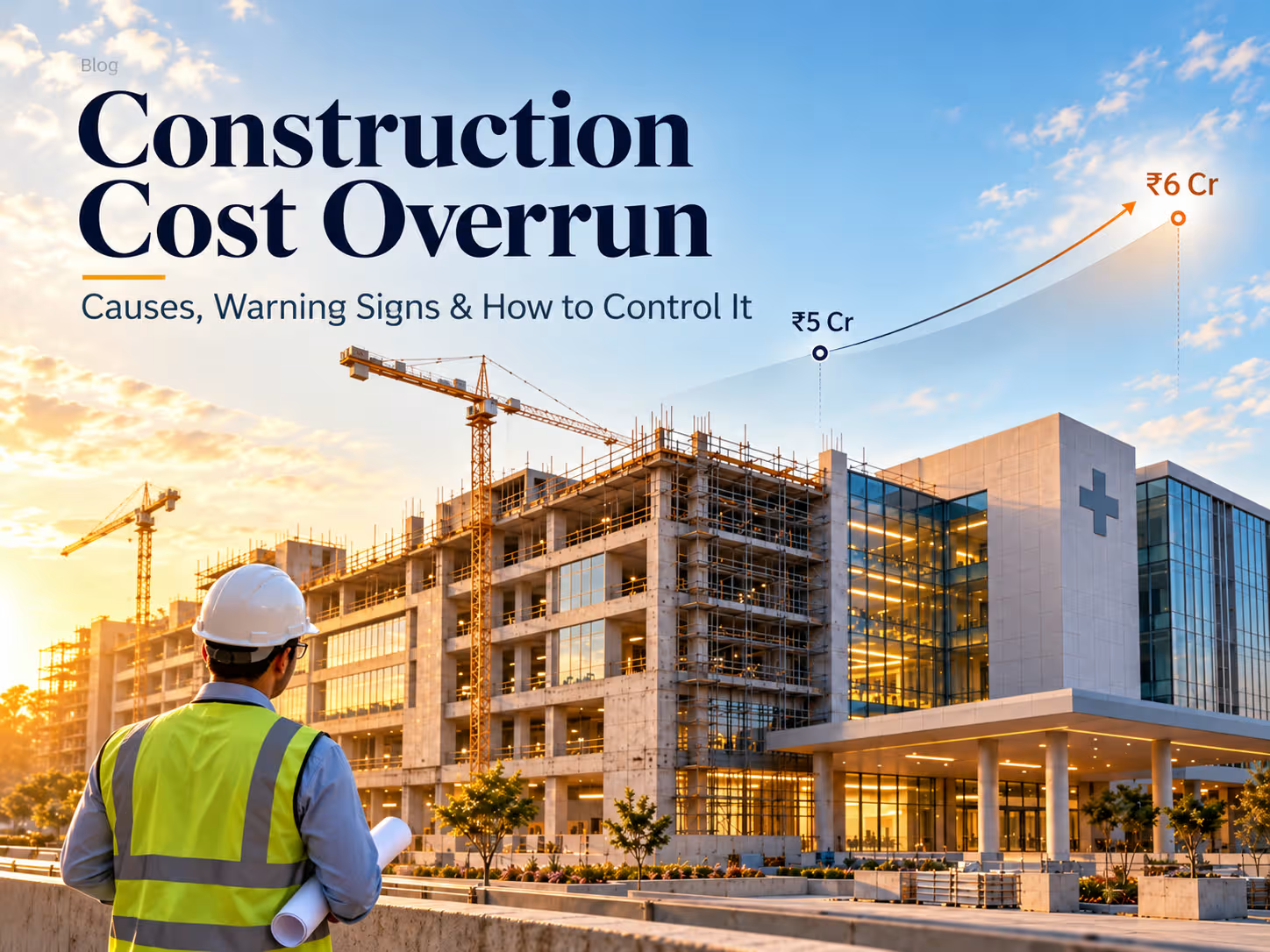
A charitable trust approves ₹5 crore for a new hospital block. The budget looks reasonable. Construction begins.
Six months later, the revised forecast becomes ₹5.6 crore. A few months after that, it reaches ₹6 crore. The board asks the obvious question:
Where did the extra ₹1 crore come from?
In most projects, the answer is not one major mistake.
A construction cost overrun usually builds gradually through gaps between what the original budget assumed, what the design eventually required, what the contractor priced and what the site actually needed.
For hospitals, schools, NGOs, charitable trusts and CSR-funded infrastructure projects, this becomes particularly serious because funding is often approved against a defined budget and scope.
The good news is that many overruns give warning signs early.
The challenge is identifying them before they become expensive.
Do you need a construction partner in 2026?
A construction cost overrun happens when the expected or final cost of a project exceeds the budget originally approved.
Owners generally need to track three numbers:
The most important number during construction is usually the forecast cost at completion.
A project may have spent only 40% of its budget and still be heading towards a major overrun because expensive packages such as MEP systems, lifts, finishes and external works often come later.
This is why cost control should focus not only on: “How much have we spent?”
but also: “What will this project cost when it is finished?”
A ₹1 crore overrun rarely appears as one ₹1 crore event.

It can develop through several smaller changes.
These figures are illustrative and not industry averages.
No single item looks disastrous.
Together, they add ₹1 crore to a ₹5 crore project a 20% increase.
This is how many real construction cost overruns develop
How to Estimate Construction Timeline for Any Project
Many project budgets begin with a simple calculation:
Built-up area × assumed cost per square foot
This can be useful during very early feasibility, but it becomes risky when treated as the final project budget.
The rate may come from:
A basic school block cannot be budgeted using the same assumptions as a hospital with HVAC, medical gases, lifts, fire systems and specialised electrical infrastructure.
Prepare an elemental estimate covering:
At an early stage, it is often better to communicate the budget as a range rather than pretending the number is already exact.
When contractors receive incomplete drawings, they still have to quote.
Uncertainty then appears through:
The missing information eventually returns as variations during construction.
But by then, the owner no longer has the same competitive pricing environment available during tendering.
Tender only after architectural, structural and MEP information has been sufficiently developed and coordinated.
If some items remain provisional, make their total value visible from the start.
Scope creep is the gradual addition of work after the budget has already been approved.
Examples include:
Each request may appear small in isolation.
But an additional room may also require lighting, HVAC, electrical points, plumbing, fire detection and furniture.
Freeze the project brief at an agreed stage.
After that, every change should show:
Ground conditions can quickly create additional cost.
Unexpected rock, groundwater, buried utilities, retaining requirements or access constraints may lead to:
Once the contractor is mobilised, options become limited.
Complete appropriate:
before finalising the design and tender quantities.
This is especially important in hospitals and other services-heavy buildings.
Electrical systems, HVAC, plumbing, fire protection, medical gases, lifts and IT infrastructure all need physical space within the building.
If these systems are considered only after architecture and structure are substantially fixed, problems appear on site.
Typical consequences include:
Bring MEP consultants into the project early.
Major power, cooling, water, equipment and medical-gas requirements should be understood before construction drawings are finalised.
Architecture, structure and MEP should then be coordinated together.
A delay costs money even when no new work is added.
Site supervision, labour, contractor overheads, equipment rental and consultant costs continue every month.
Material prices may also rise while the project waits.
Long-lead equipment can make this worse.
Depending on the project, this may include:
Prepare a realistic project programme and a separate procurement schedule for long-lead packages.
Track:
Specification → Approval → Order → Manufacturing → Delivery → Installation
for every critical item.
Rework means paying twice for the same area.
A wall opened because a service conduit was missed may require:
In healthcare projects, these changes can become particularly disruptive because services and clinical environments often require tighter coordination.
Use:
Sometimes the project team is not the only source of delay.
Decisions may wait for:
Meanwhile, the site continues to incur cost.
Prepare a decision schedule showing:
Small operational decisions should not need the same approval route as major financial changes.
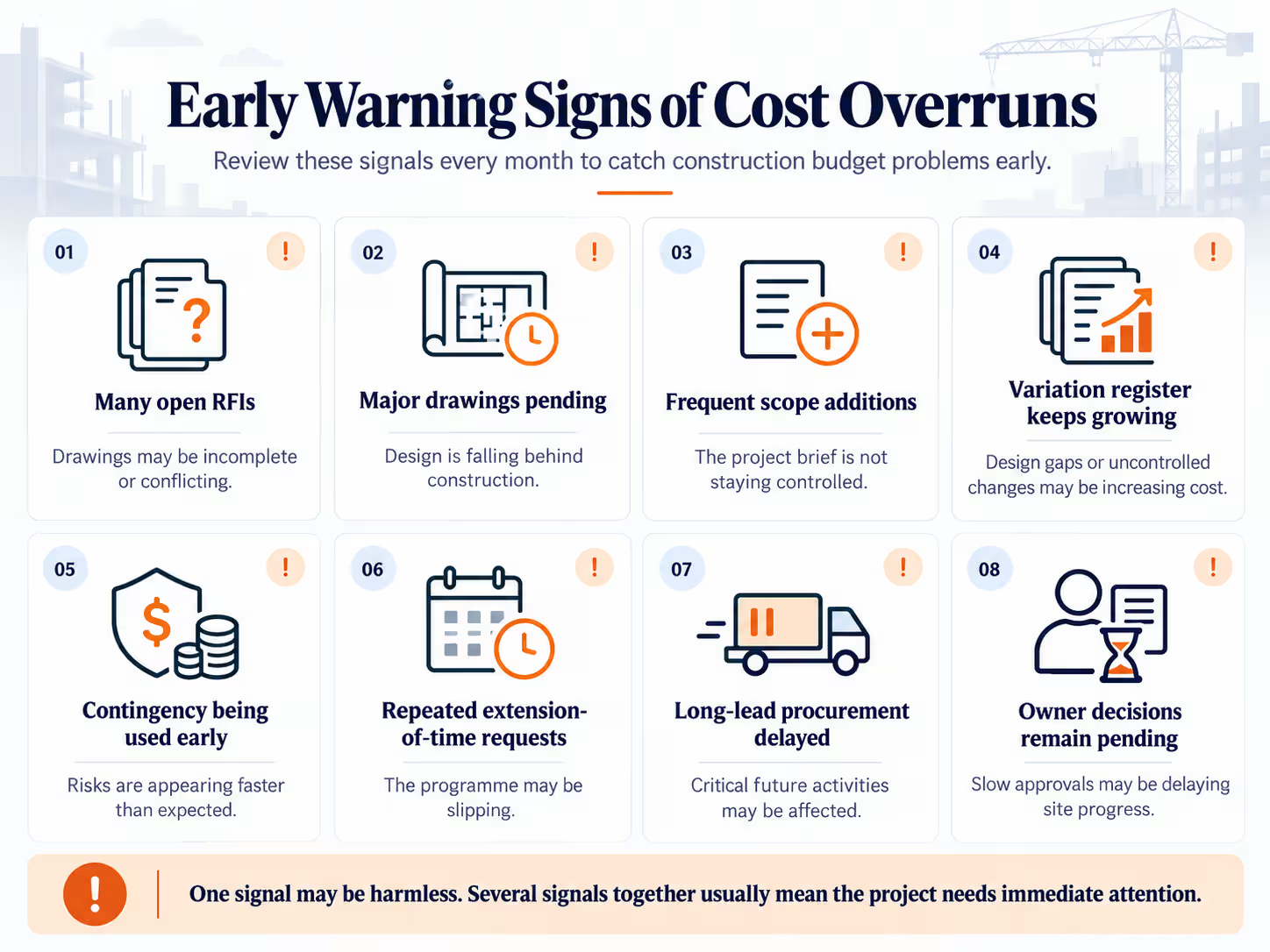
Most construction cost overruns provide warning signs before the final forecast becomes alarming.
One warning sign may not be serious.
Several warning signs continuing together should trigger a deeper review.
10 ways to achieve sustainaible design in India in 2026
Define:
For healthcare projects, major clinical functions and equipment should be understood early because they directly affect architecture and MEP.
If the institution can realistically fund ₹5 crore but the proposed brief is likely to cost ₹8 crore, that problem should be resolved before design advances.
Classify requirements as:
This becomes extremely useful later when trade-offs are required.
Do not complete the design and calculate the cost afterwards.
Cost targets should influence decisions while alternatives are still being explored.
Architecture, structure and MEP should progress through common review cycles.
Review estimated cost at:
If the cost starts moving, correct it while the solution still exists on paper.
Value engineering should ask:
Can we achieve the required function more efficiently?
It should not simply mean reducing quality.
Structural systems, facade options, HVAC strategies and material specifications often have more room for optimisation during design than during construction.
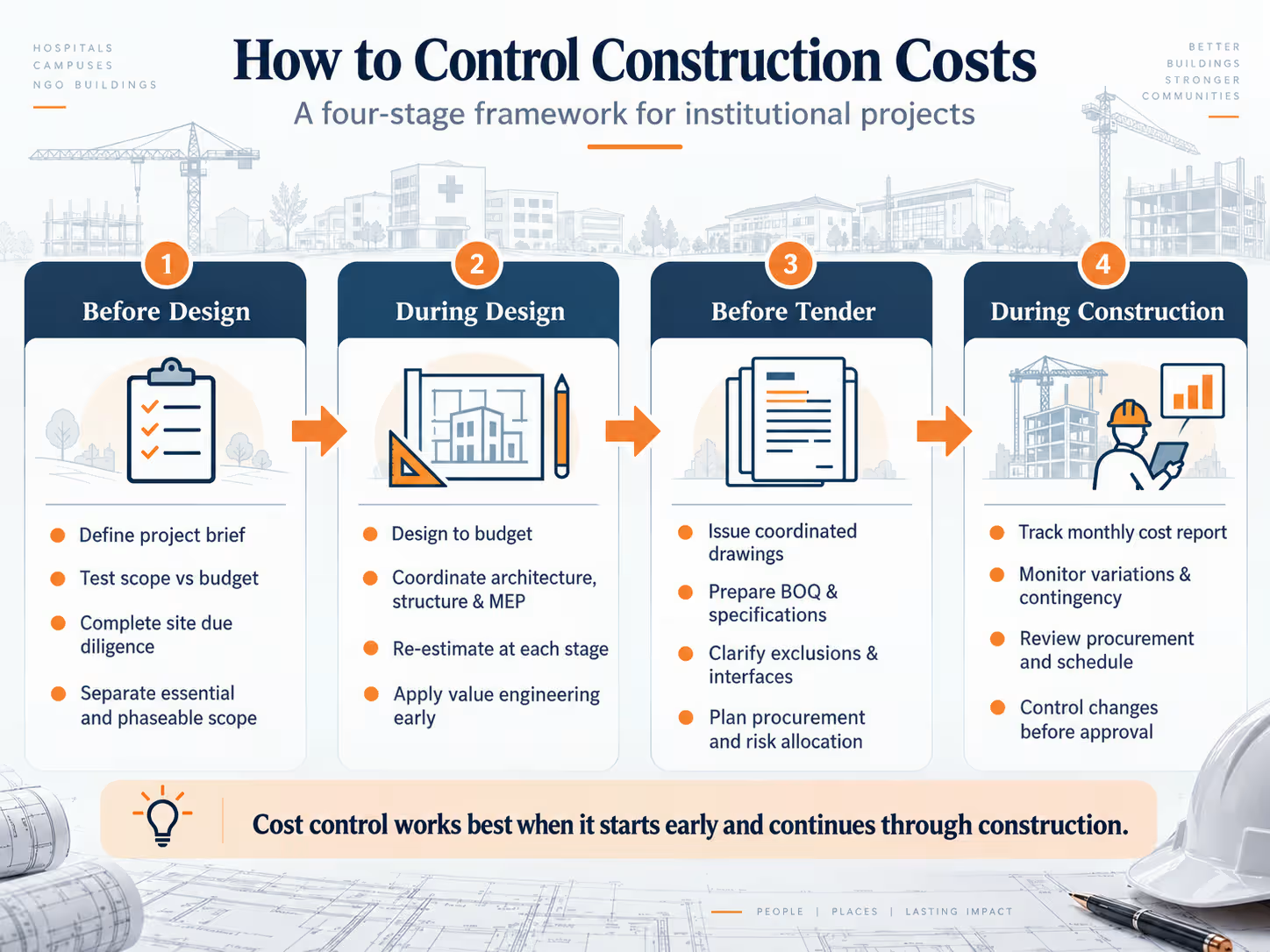
Process graphic: How to Control Construction Costs
Hospital Construction Requirements in India
Before inviting contractors:
A low tender based on incomplete information does not necessarily result in a low final project cost.
Before approving additional work, ask:
This simple discipline prevents many small decisions from quietly turning into a large overrun.
Phased Hospital Construction vs Single-Phase Construction in 2026
Once the forecast has exceeded the approved budget, random cost cutting usually makes the situation worse.
A better recovery sequence is:
Stop adding optional scope until the financial position is clear.
Include:
Focus on packages where the project still has room to make decisions.
Divide it into:
Look for opportunities to re-tender, consolidate orders or review equivalent specifications.
Find lower-cost ways to deliver the required performance without compromising safety or functionality.
Complete and commission the essential project first.
Move genuinely optional work into a defined future phase.
Institutional projects require particular care because their budgets are often less flexible.
Healthcare projects can experience cost increases when:
NGO and CSR-supported projects may face another challenge: funding and construction programmes do not always move at the same pace.
For these projects, it is especially useful to:
A project management consultant cannot guarantee that a project will never face an increase.
Site risks, market movements and genuine scope changes will still occur.
The real value of project management is making these risks visible early.
This can include:
Cost control is not one estimate prepared at the beginning of the project.
It is a continuous process from feasibility to handover.
A construction cost overrun occurs when the expected or final cost of a project exceeds the approved budget.
Common causes include unrealistic budgets, incomplete design, scope creep, inadequate site investigation, late MEP planning, project delays, rework, weak procurement and slow decisions.
Watch for growing variations, open RFIs, delayed drawings, early use of contingency, procurement delays and repeated scope changes.
Cost control should begin before construction through better budgeting, coordinated design, detailed BOQs, procurement planning, change control and regular forecasting.
Freeze optional changes, update the forecast cost at completion, separate committed and uncommitted costs, prioritise remaining work and value-engineer work that has not yet been executed.
A PMC cannot eliminate every market or site risk, but effective project management can reduce avoidable overruns through better coordination, cost monitoring, procurement planning, change control and progress tracking.
A project rarely becomes expensive overnight.
The ₹6 crore forecast that worries the board in month eighteen may have started taking shape months earlier:
Projects that remain close to budget are not simply luckier.
They connect scope, design, cost, MEP, procurement, schedule and construction from the beginning.
And they repeatedly ask the most important question:
What will this project cost when it is finished?
BuiltX works with organisations to evaluate project feasibility, test budgets against the project brief, coordinate architectural, structural and MEP planning, and identify execution risks before they become expensive site problems.
If you are preparing a new hospital, educational facility, institutional campus or nonprofit infrastructure project, early planning can create far more opportunities to control cost than late-stage corrections.
Talk to the BuiltX team about your project →